
Answers to frequently asked questions from Kiwi businesses thinking about starting their investment journey.

RAISING CAPITAL FAQS
If I’m looking to raise capital, who should I reach out to?
Leveraging your networks to get advice about the process is a great place to start. Ask your peers and friends who have already raised capital or seek out a mentor.
At some point, you will likely need legal and financial advisors to help complete the deal. There will be costs associated with this and engaging these professionals early might not be the best place to start if you're unsure whether it's what your business really needs.
Understanding the effort, time commitment and different types of investment is a vital first step before trying to connect with investors.
How do I know how much money to ask for?
The amount of money you seek should be the amount you need to execute your future business plans.
If you have a clear 3 – 5 year growth plan in place, you can work out how much money you need to achieve that growth and in turn develop a capital strategy where you identify when you will need to inject extra money into your business to continue growing. For example, at the end of year 1 of your plan you might need $100K of funding to lease a second store or hire a head of marketing.
The investment amount can also sometimes be worked out from a company valuation perspective. For example, if you value your business at $1m and only want to sell 10%, then the most money you should expect to raise is $100k.
How long does it take to raise capital?
Generally, the process takes between 3 months to 1 year but is typically longer for a first time raise.

Are there different methods of raising capital?
Generally, the process is the same, but the investors are different (see next question). The steps below outline key stages of capital raising.
- Preparing your business – involves planning your growth, undertaking market research, competitor analysis, creating a financial model and stress-testing your assumptions before approaching investors.
- Confirming your capital strategy – is the process of identifying when you need money, how much you need and who you are going to ask (also known as investor profiling).
- Pitching to investors – includes creating your investment collateral (pitch deck and flyer), practising your pitch, and connecting with potential investors.
- Doing the deal – involves negotiating your valuation, preparing a term sheet and cap table, undertaking your due diligence and other various legal processes.
How do I find investors?
The important thing to know before cold calling VC firms is that there are different types of investors. Each investor type has pros and cons and suits different stages of the business lifecycle.

The key steps in finding and connecting with investors.
- Investor profiling Firstly, you'll need to spend time identifying your suitable investor and researching the local investment market to draw up a shortlist.
- Leverage your networks Reach out to your networks, If appropriate, you could ask them for an introduction to a potential investor.
- Start making approaches If you, your team or a business contact has a connection to an investor on your shortlist, get a warm introduction through them. If not, cold call! Sending a flyer (not an entire pitch deck) with a brief cover email is the usual approach. If they don't reply, assume they're not interested.
How do I make my company attractive to investors?
Generally, when investors review opportunities they are looking for:
- A clear link between your business strategy and the money you are asking for. Ensure you can explain what you are using the funds for and how that will enable your business growth.
- Returns. Investors want to back businesses that have the potential to grow beyond the New Zealand market. How are you demonstrating that your business is scalable? Investors will evaluate your business model, market analysis and financial model to ensure you are well positioned for revenue growth.
- A competitive advantage. Investors will want to know who your competitors are and what sets you apart from them.
- Risk mitigation. You'll need to show investors that you understand the risks facing your business and that you have plans to address these, e.g. labour shortages, a key competitor emerging, loss of IP, changes to regulations.
- A passionate and trustworthy founder. Investors want to know who they are backing. You will need to show you have the drive and capability to lead your business through growth.
- An easy-to-understand product/service that solves a problem. How does your product or service solve a problem? And why will your customers value that solution? You need to succinctly explain what drives you to solve the problem.
All the above points should be covered in your investment collateral and pitch. Specifically, the types of documents investors will expect you to have ready are:
- Investment flyer
- Pitch deck
- Financial model
- A detailed investment memorandum
How do I value my company?
Company valuation is not an exact science and at the end of the day, it's whatever the highest bidder is willing to pay.
When it comes to valuing your company, you pick the starting valuation and put forward the data and assumptions that support your own guesstimate.
Your potential investor will consider this and then make their own call about the value. It's a process of negotiation.
There are several methods that investors use to reach their valuation but generally, there are two main types.
Absolute valuation methods try to determine a company's "true" value based only on fundamentals such as dividends, cash flow and growth rates.
Relative valuation methods measure a company's value as compared to that of others.
Many people start their analysis with the relative valuation model because it's easier and faster to calculate than the absolute valuation model.

What risks are involved with raising capital?
Getting involved with the wrong investors. Have you done your research on who is offering you money? Investment relationships can be like a marriage, easy to get into, hard to get out of. Make sure you do your own due diligence on investors.
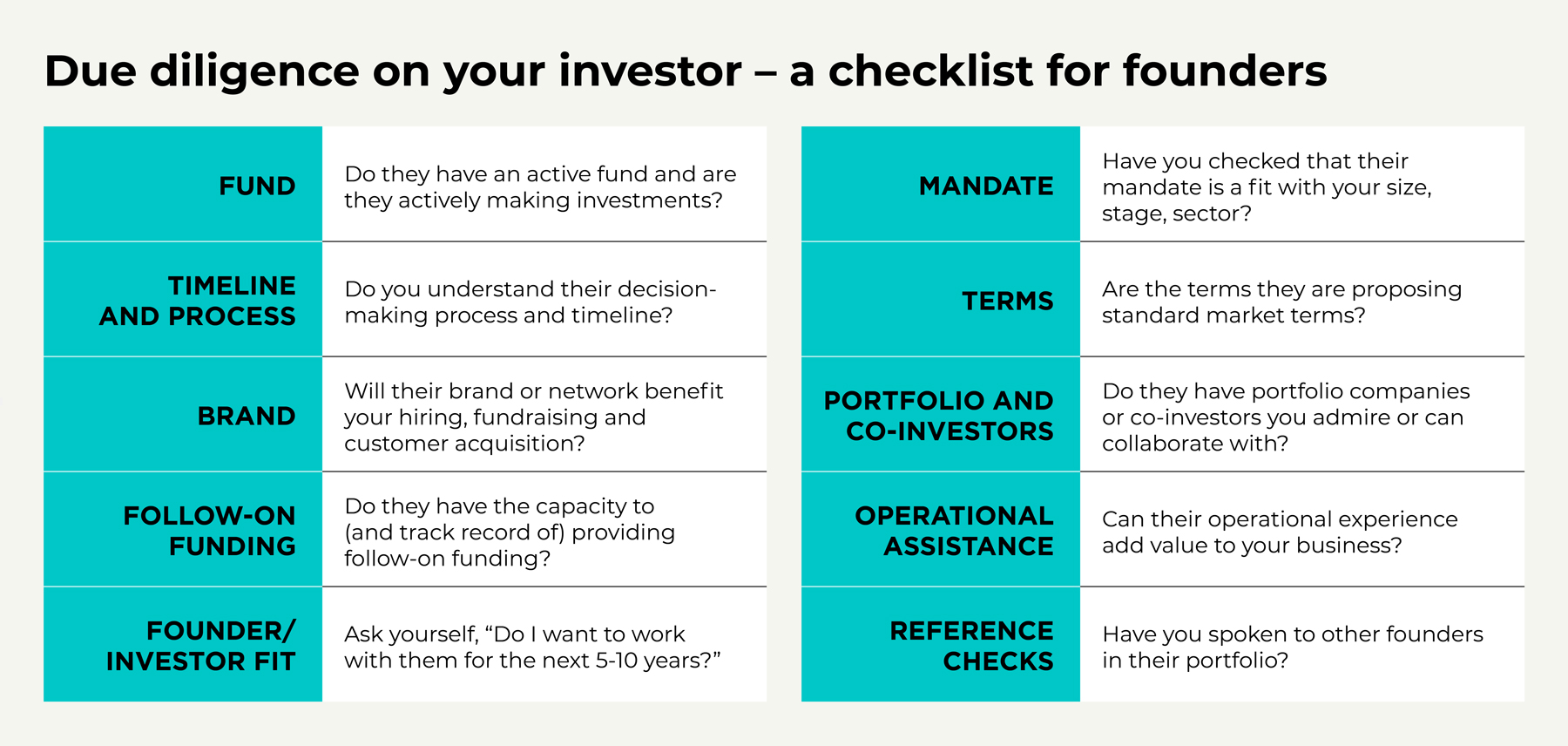
Selling too much of your company too early. Getting investment too early can over-dilute founders' shareholdings. But, if you wait until you have little money left, you’ll lose a lot of negotiating power.
Regulatory compliance. Regulatory requirements such as complying with FMCA are important to consider. Some of these issues are complex and complicated and the only way to fully ensure you are compliant is to seek professional legal advice.
What role can Invest New Zealand play in helping me raise capital?
Anyone can access capital raising advice at any time using InvestEd but our team also offers free, impartial, one-to-one investment consulting for a wide range of companies in varied sectors, and of varied sizes.
While there are no strict engagement criteria, on a broad scale, we typically work with organisations who are exporting or have international aspirations.
We will also look at if you have a potentially scalable business model, are demonstrating revenue or have customer traction.
We also support large-scale commercial projects that have potential to deliver economic benefits for New Zealand e.g. job creation.
Contact us today to see if you are eligible for this investment support.
Why does the Government support investment services?
The New Zealand Government is dedicated to growing a productive, sustainable and inclusive economy, for the good of all New Zealanders. One important way of achieving this is through encouraging smart investment to stimulate growth.
Can I trust your team with confidential and commercially sensitive information?
Absolutely! Our team consists of dedicated, investment professionals who have operated previously in the private sector. We understand and respect client confidentiality.
With honesty and trust as key characters, we operate in the best interests of our customers, value great communications and have well-developed systems in place to ensure the confidentiality and safety of your information.
Will your team work with me if I also have a private sector advisor?
It depends. We believe the private sector plays a critical role in helping New Zealand organisations raise capital and we have great relationships with many of the advisors in the market. But we look to complement, not duplicate the work of the private sector. We will look to ensure that we can add value or fill a gap in any transaction we work on, for example, connecting you with great international investors.
How do you set up a company in New Zealand?
We’re the easiest country in the world to do business in because there are few restrictions on establishing, owning and operating a business here. In fact, the process of reserving a name and incorporating your company can be completed in a matter of hours. Visit the New Zealand Companies Office to begin the process.
